
Money Habits
It Was Never About the Coffee
Why the $5 habit matters more than the $5 — and a two-week game to prove it
Back in 2017, a Melbourne property developer went on national television and told young Australians that if they wanted to own a home, they should stop spending money on smashed avocado and takeaway coffee.
The internet lost its mind. Within days, "smashed avo" became a national punchline, and a long line of commentators pulled out their calculators to prove him wrong.
On the numbers, they had a point. But I think both sides missed what actually matters.
The maths really doesn't work — on its own
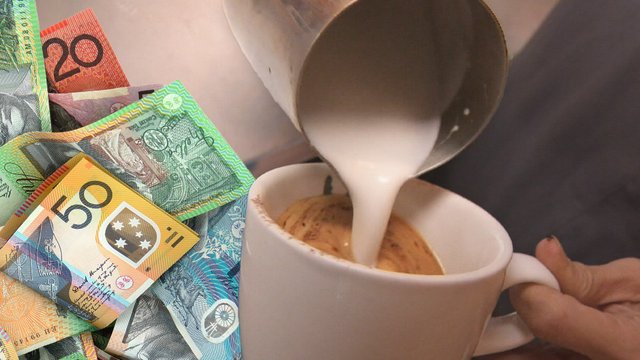
Let's be fair to the critics. A recent national survey put the average takeaway coffee at about $5.42, and closer to $5.74 here in NSW. One a day adds up to roughly $2,000 a year.
That's real money. But it won't buy you a house deposit in any capital city, and it won't clear a $40,000 car loan any time soon. So the people who mock the "make your coffee at home" advice are right about one thing: the coffee savings won't make you rich.
But it was never about the coffee
Here's what the critics miss. The coffee isn't the point. The habit is.
The way you handle small amounts of money is usually the way you handle large ones. Someone who can't say "not today" to a $5 coffee is rarely the person who says "not this year" to a $60,000 car upgrade, a bigger mortgage or a holiday on the credit card.
In more than 40 years in finance, I've seen this again and again. People on good incomes stay broke, and people on ordinary incomes quietly build wealth. The difference is rarely what they earn. It's what happens to each pay rise.
That's the real enemy, and it has a name: lifestyle creep. You earn more, so you spend more. A better car, a bigger house, nicer dinners, a few more subscriptions. Your income goes up, but nothing is left over — and every dollar of new debt makes it worse.
Getting rich and staying rich are two different games
Plenty of people get a windfall: a big salary, a business sale, an inheritance. Far fewer keep it.
The ones who build lasting wealth tend to share one trait. They buy assets first and lifestyle second. They let their income grow faster than their spending, and they put the gap to work — paying off debt, then building investments that pay them.
That discipline doesn't appear magically when the money arrives. It's practised on small things first. The coffee is the training ground.
Think of it this way: if you can't redirect $5 a day, what are the chances you'll redirect a $10,000 pay rise?
A two-week game you can start this week
Rather than another lecture, here's a game. For the next two weeks, make your coffee at home (or skip whatever daily treat you'd normally buy). Put that money aside — at one coffee a day, that's around $75 to $80 after the two weeks are done.
Then do one of these, depending on where you are:
- If you have debt (most of us do): put the whole lot straight onto your smallest debt, as an extra repayment on top of the minimum. That's the Debt Snowball in action. If that debt is a credit card charging around 20% interest, every dollar you pay off saves you that 20% — a guaranteed return few investments can match.
- If you're debt-free: use it to buy a small slice of an asset. Some people like the idea of owning a share in the very company they used to buy from — you stop being the customer and start being an owner. With small amounts, watch that brokerage and currency fees don't eat a big chunk of your $80; a low-cost ASX-listed fund or micro-investing app like Raiz may suit better than a single overseas share.
Either way, you'll learn something worth far more than $80: that you can change a habit, and that the money you redirect actually goes somewhere.
Make it stick
Games are fun for two weeks. Habits are what change your life. Two simple ways to lock this in:
- Give it a line in your budget. Use our free Zero-Based Budget Planner to give every dollar a job — including the coffee money that now goes to debt.
- Watch your progress. Run your debts through the Debt Snowball Calculator and see how small, regular extra payments bring your debt-free date forward. Gold members can track plan versus actual in Budget Pulse.
The bottom line
Making your own coffee won't make you rich. But becoming the kind of person who can make that choice — again and again, as the amounts get bigger — just might.
Start small. Play the small games well. The big games are coming.
Ready to start? Join Money Syndicates free for access to our budgeting tools and much more.
General information only. This article does not take into account your personal objectives, financial situation or needs, and is not financial, tax or credit advice. Mentioning a company or product is not a recommendation to buy it. Consider your own circumstances and seek advice from an appropriately licensed professional before making financial decisions.